

Essential Camping Gear for Beginners 2026: Must-Have List
Table of Contents
- Start Here: Essential Camping Gear for Beginners in 2026
- Your Beginner Camping Checklist: What to Pack First
- Choosing the Best Tent for Beginners
- How to Set Up a Camping Tent Without the Stress
- Camping Sleeping Bag and Sleeping Pad: Build a Warm, Comfortable Bed
- Budget-Friendly Camping Gear That Still Lasts
- Safety and Packing Extras Beginners Often Forget
- Frequently Asked Questions
Last Updated: October 19, 2026
Start Here: Essential Camping Gear for Beginners in 2026
Building a camping kit from scratch feels overwhelming until you sort gear into two piles: what keeps you safe and warm, and what just makes the trip nicer. This guide from Summit Pro Gear covers the essential camping gear for beginners in 2026, focusing on the items you genuinely need for a first or second trip. Camping gear is the set of equipment that provides shelter, sleep comfort, warmth, and basic safety on an overnight outdoor trip. Our advice below follows one rule: buy the shelter and sleep system first, then fill in the rest as your trips get longer.

Below, we'll show you exactly how to pack without overspending, and which pieces you can borrow or skip on a first outing.
Your Beginner Camping Checklist: What to Pack First
The best beginner camping checklist starts with shelter, sleep, and safety, then adds comfort items only once those three are covered. Packing in that order stops you from buying gadgets before you have a dry place to sleep.
Here's the short version we recommend to first-timers:
- Tent with a waterproof rating and all pegs and guylines
- Sleeping bag rated for the overnight low, not the daytime high
- Sleeping pad for insulation and cushioning
- Headlamp plus spare batteries
- First aid kit
- Water bottles and a simple water filter or purification tablets
- Rain layer and one warm mid-layer
- Basic cook kit, lighter, and easy food
- Trash bags and a small repair kit
The common mistake is buying the comfort extras first. A camp chair is lovely; a leaky tent is miserable.

Choosing the Best Tent for Beginners
The best tent for beginners is a freestanding or instant-pitch model that sets up in minutes, fits your group size, and carries a stated water-resistance rating. Everything else is preference.
Three specifications decide most first purchases:
| Spec | What to Look For | Why It Matters |
|---|---|---|
| Setup style | Instant or simple pole | Less frustration in wind or rain |
| Capacity | One more person than sleeps in it | Room for gear and movement |
| Water resistance | Stated rating plus taped seams | Keeps a rainy night from ruining the trip |
| Packed weight | Light enough to carry from the car | Matters if you ever walk to the site |
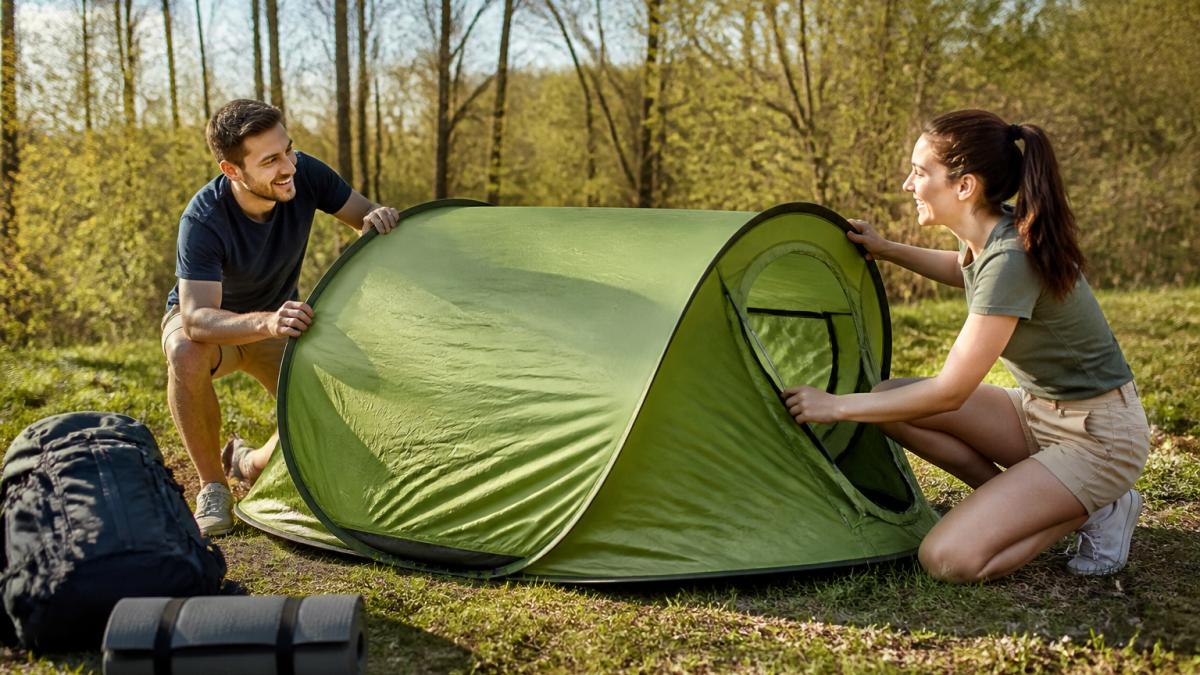
Why the Night Cat Instant Tent Suits First-Timers
The Night Cat Instant Waterproof Camping Tent solves the problem that sinks most first trips: setup. The throw-open design opens in about 3 seconds, and pack-down is a simple figure-eight fold repeated twice.

At 114 × 79 × 47 inches, it fits two adults and a queen-size air mattress, with space left for one or two children or your gear. Two doors and two wide windows keep air moving, and you can prop a door with trekking poles or sticks to create a shaded porch. The army-green, single-layer, three-season polyester shell carries a 2000 mm water-resistance rating, taped seams, fiberglass poles, pegs, and guylines. It weighs 6.6 lb and packs 40% smaller than traditional pop-up tents. At $124.99, it is the piece we would buy first.
How to Set Up a Camping Tent Without the Stress
To set up a camping tent calmly, pick a level, clear pitch, orient the door away from the wind, stake the corners before tensioning anything, and clip the poles last. Stress comes from doing those steps out of order.
Here is the sequence we use:
- Clear sticks and stones from a level patch, slightly uphill of low ground.
- Lay the footprint or groundsheet down and unfold the tent on top.
- Stake the four corners loosely, leaving room to tension later.
- Assemble poles and feed or clip them into place.
- Attach the rainfly, then tension guylines at an angle away from the tent.
- Check that seams and doors sit taut but not stretched.
Total Time: 10-15 minutes for a first attempt, under 5 once you know the tent.
Camping Sleeping Bag and Sleeping Pad: Build a Warm, Comfortable Bed
A camping sleeping bag and sleeping pad work as one system: the bag traps warmth and the pad stops the ground from pulling it out of you. Skip the pad and even a good bag feels cold by 2 a.m.
Match the bag to the overnight low rather than the season label. The Naturehike Mummy Sleeping Bag is listed for a 0-5°C comfort range, works as a three-season bag for spring, autumn and winter, and uses Terylene fabric with polyester filling. It suits sleepers up to 1.8 m tall. At $91.99, it is a sensible first bag.
Pairing a Mummy Bag With an Inflatable Pad
The Essential Camping Inflatable Sleeping Pad arrives with its own pump and pillow, so you inflate at the campsite without a separate pump. The pad, pillow, and pump come as one set, which cuts your bedtime routine to seconds and packs down small. It costs $89.99.
Night Cat Instant Waterproof Camping Tent for Outdoor Adventures →
A common mistake is buying an air mattress with no insulation. Air moves heat, so a plain mattress feels cold. A pad designed for sleeping adds a barrier between you and the ground.
Budget-Friendly Camping Gear That Still Lasts
Spending less works when you spend it on the items that fail first. Buy a decent shelter, bag, and pad; borrow or buy cheap for everything else.
Where to save:
- Cook kit: One pot, one mug, one spork. Skip the full set.
- Lighting: A headlamp beats a lantern for hands-free use.
- Storage: A dry bag or two keeps clothes dry without costing much.
- Daypack: The Naturehike Light Durable Hiking Backpack with Rain Cover is 18L, uses waterproof nylon, has adjustable shoulder straps, and folds down small. At $35.99, it covers day hikes and doubles as your travel bag.
Where not to save: seams, zips, and anything between you and the ground. A cheap tent that leaks costs more than a good one bought once.
Safety and Packing Extras Beginners Often Forget
Safety gear is the category beginners skip, and it is the one that matters most on a first trip. A compact kit costs little and covers the scrapes, blisters, and cuts that camping produces.
The Rhino Rescue Outdoor Travel First Aid Kit is lightweight, waterproof, and compartmentalized, so it fits in a backpack, glove box, or bike bag and keeps supplies clean and reachable. At $46.99, it earns its place.
Add these too:
- Headlamp plus spare batteries
- Printed map of the area, not just a phone
- Lighter in a sealed bag, plus matches as backup
- Trash bags for waste and wet clothes
- Small repair kit: tape, cord, spare peg
- Water treatment, since CDC guidance on backcountry water treatment explains why stream water needs treating
Check the forecast with National Weather Service forecasts before you leave, and tell someone your plans. The Leave No Trace principles are worth reading once; they shape how you pack and where you pitch.
Frequently Asked Questions
What gear do beginners need for camping?
At minimum, you need a tent, a sleeping bag, a sleeping pad, a headlamp, a first aid kit, and a way to store food. Add a small stove, a water bottle, and weather-appropriate clothing. Start with the essentials and borrow or rent specialty items until you know what you enjoy. A written beginner camping checklist helps you avoid buying things you will never use.
What should I pack for my first camping trip?
Pack for three layers: shelter, sleep, and safety. That means a tent with a rainfly, a sleeping bag rated for the overnight low, and a sleeping pad for insulation. Bring a headlamp, a basic first aid kit, water, snacks, and a small repair kit. Leave the gadgets at home. Most first-timers overpack clothing and underpack warmth for the evening.
What type of tent is best for beginner campers?
Look for a three-season tent that sets up in minutes and has a full rainfly. Pop-up and instant designs remove the pole frustration that turns beginners off camping. The Night Cat Instant Waterproof Camping Tent opens in about three seconds and fits two adults plus a queen-size air mattress, which makes it a practical choice for first trips.
What sleeping gear do I need for camping?
You need both a sleeping bag and a sleeping pad. The bag keeps you warm; the pad keeps you off cold ground and adds comfort. For three-season camping, a mummy bag rated around 0-5°C works for most nights. Pair it with an inflatable pad that has a built-in pump, so you are not breathing hard at bedtime. Together they turn a rough night into a restful one.
How do I choose camping gear for the weather and campsite?
Check the overnight low, not the daytime high, and add a margin of about 5°C to your sleeping bag rating. For rainy trips, prioritize a tent with taped seams and a waterproof rating of at least 2000 mm. For car camping, weight matters less; for backpacking, keep your pack under 18L for day hikes and choose lightweight gear. Match your kit to the trip, not the catalog.
What camping gear can beginners borrow or leave at home?
Borrow or rent specialty items like backpacking stoves, lanterns, and large coolers until you camp regularly. Leave at home the axe, the full tool kit, and the extra folding furniture. You also do not need a dedicated camping wardrobe. Focus your spending on the tent, sleep system, and first aid kit, because those directly affect how well you sleep and how safe you stay.
A first camping trip goes wrong for predictable reasons: a tent that fights back, a cold night on an uninsulated pad, or a missing first aid kit. Summit Pro Gear stocks the pieces that prevent all three, from the Night Cat instant tent to the inflatable sleeping pad and the Rhino Rescue first aid kit, backed by fast, friendly customer service and a catalog built for beginners and experienced campers alike. Get started with Summit Pro Gear and pack a kit you can trust on your first night out.